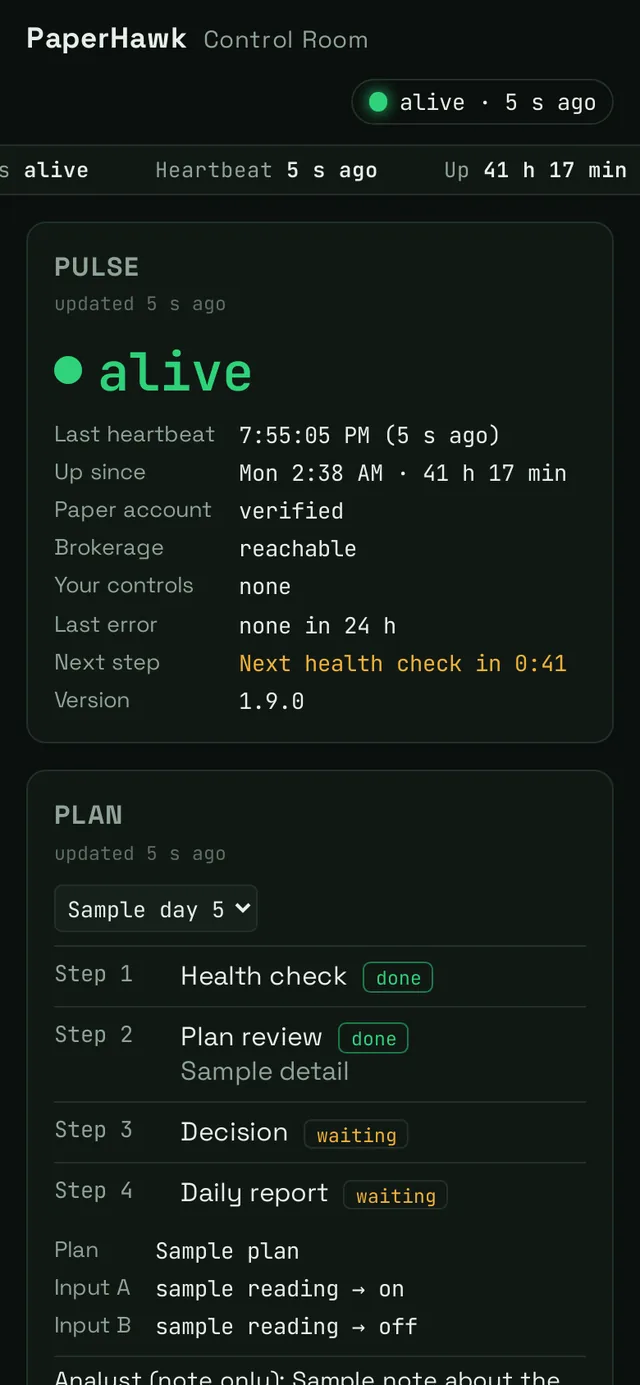
The health check
Last heartbeat, uptime, the practice-account check, whether the broker is reachable, the last error and the next step, counting down.

A self-running trading bot for a practice account. It lives on a tiny cloud server nobody can log in to, and reports to a private Control Room on its owner's phone.
The bot trades a practice account on its own, around the clock. About once a minute it reports to the Control Room, and the owner watches it all from a phone. The bot never opens a door: it speaks, the room listens, and only the owner can look.
Runs on its own. No inbound connections, and it can only call an allow-list of hosts, including the practice broker's API.
Checks the signature, throws away anything older than what it has, keeps the newest in a small database and works out the light.
Reads three small endpoints every 15 seconds behind a one-time-code sign-in. No buttons trade or change anything.
Snapshots carry only an approved set of fields, never keys or account numbers.
One glance answers the only question that matters: is it alive and behaving? The light stays green while heartbeats arrive, turns amber when they go quiet and red on a real problem.
The real Control Room, running locally on demo data. Watch the heartbeat land, the health check count down and the owner's pause switch flip.
Screens from the actual Control Room with every value swapped for demo data.
Last heartbeat, uptime, the practice-account check, whether the broker is reachable, the last error and the next step, counting down.
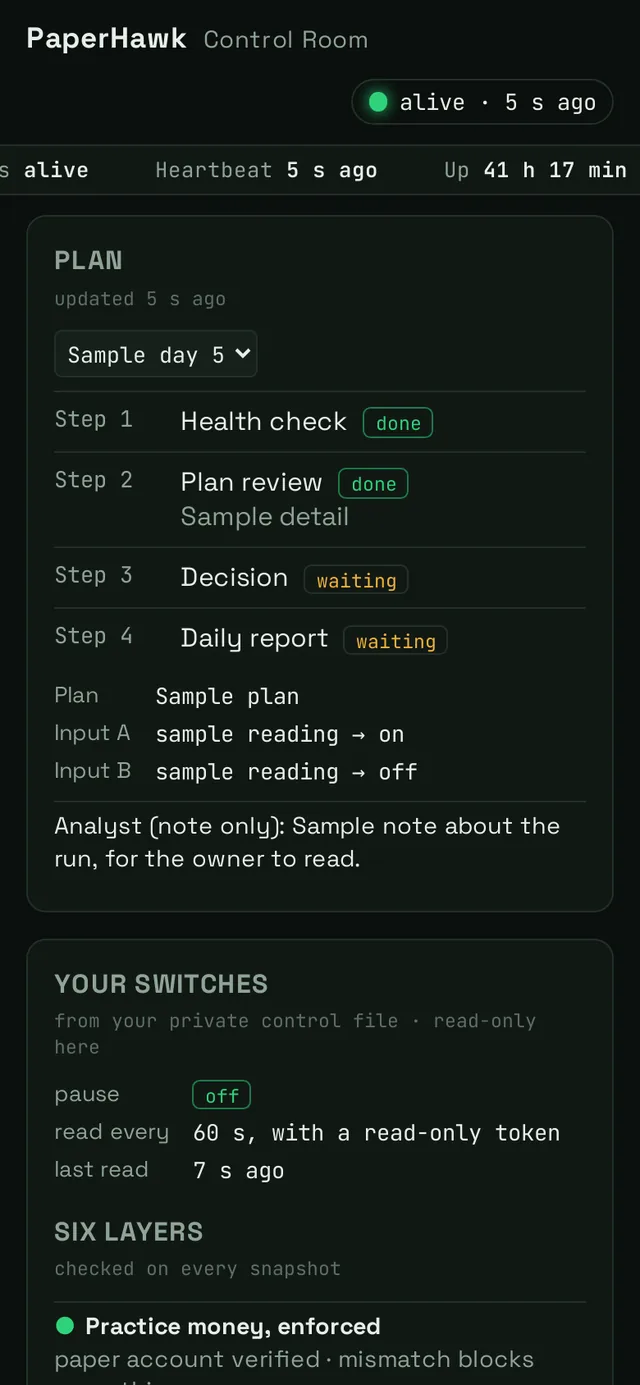
The run's steps in order, marked done or waiting, with a day picker to look back and the AI analyst's notes.
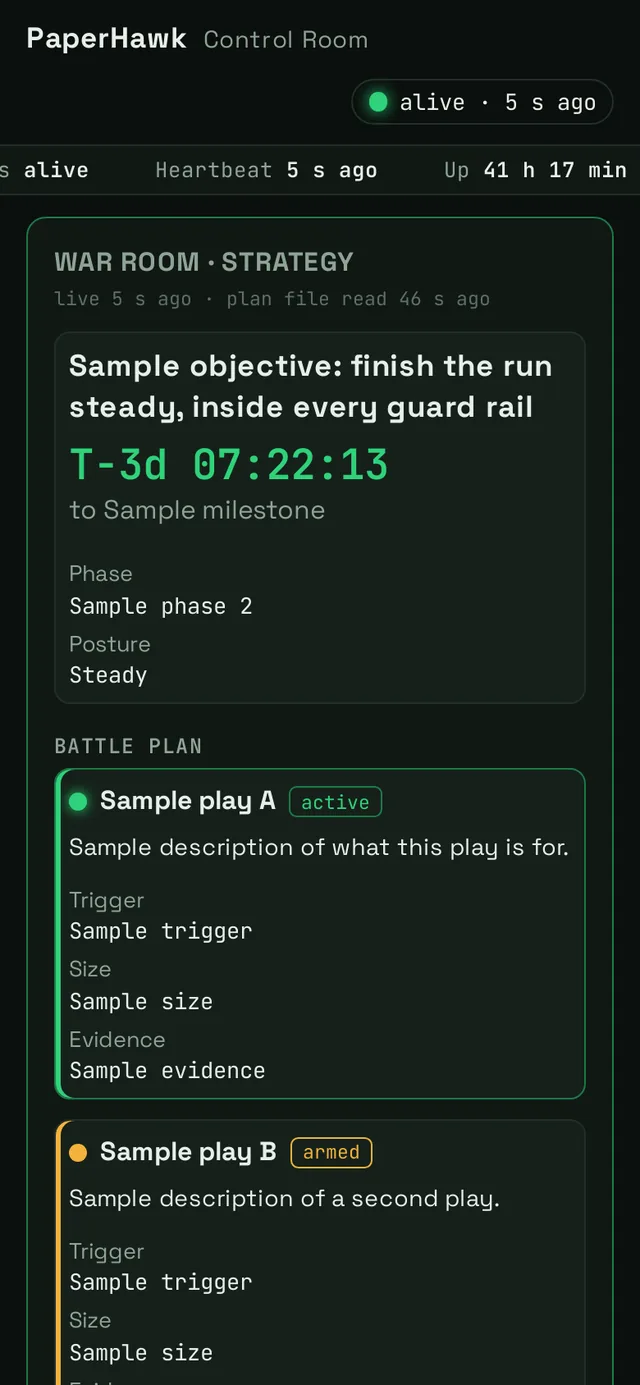
The objective, a live T-minus to the next milestone and a card for every play, lit active, armed or off.
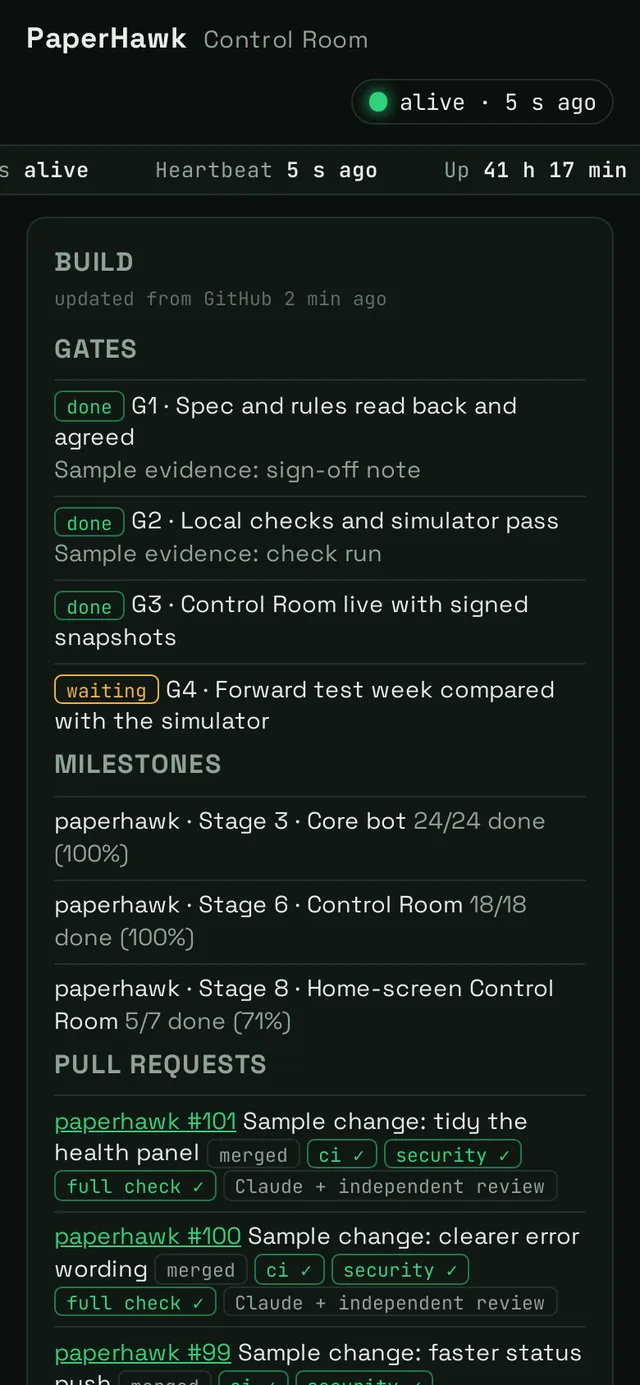
Gates, milestones, recent changes with their checks and reviews, tests, and what needs doing next.
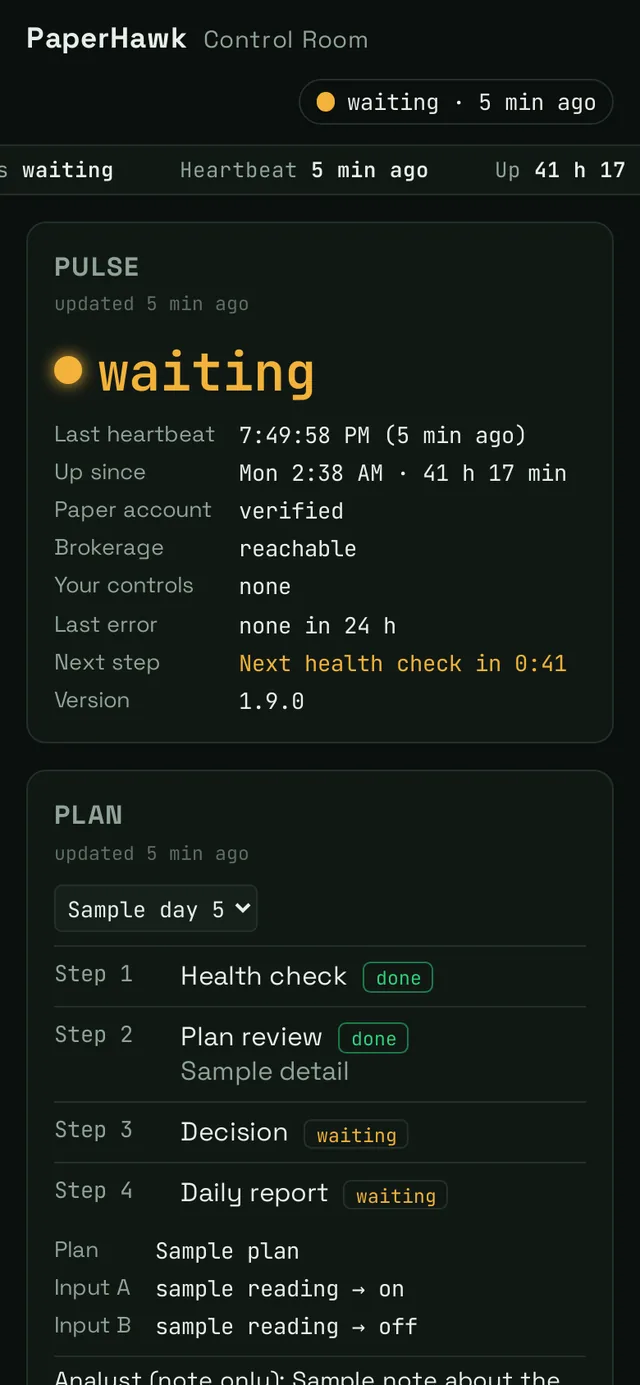
No heartbeat for a few minutes and the light changes on its own. Nobody has to notice a silence.
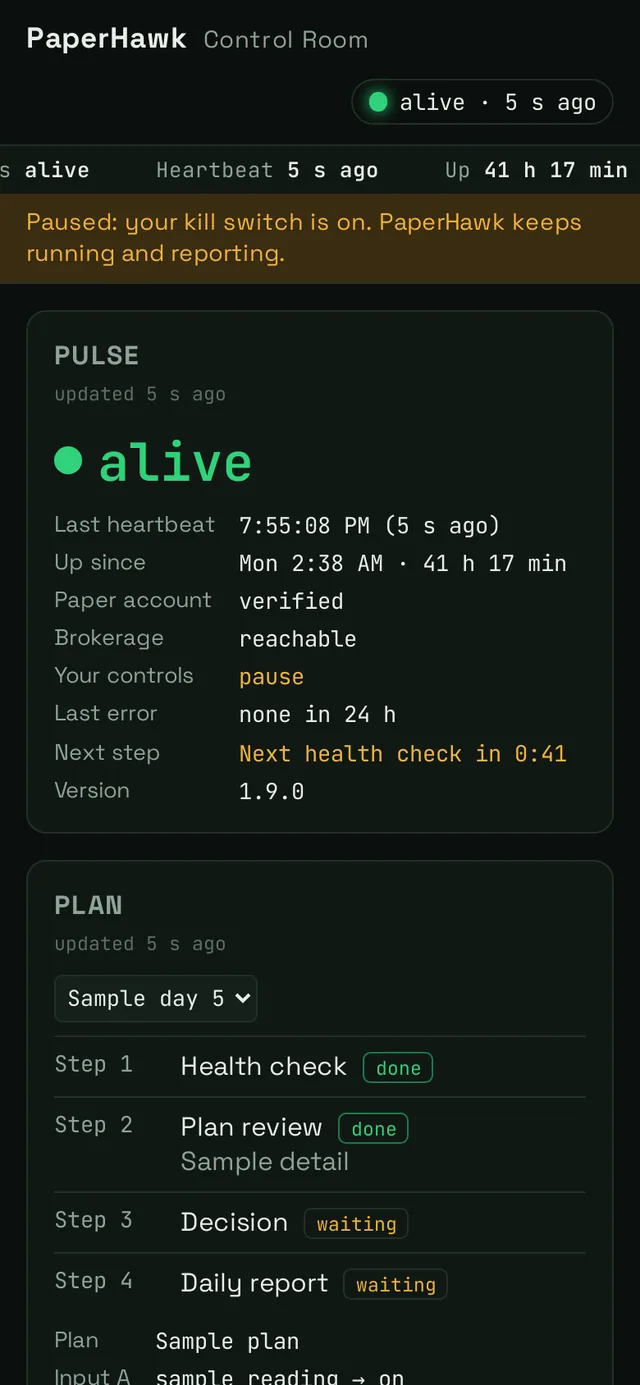
The owner's switch lives where the bot can only read it. The room shows it; it never changes it.
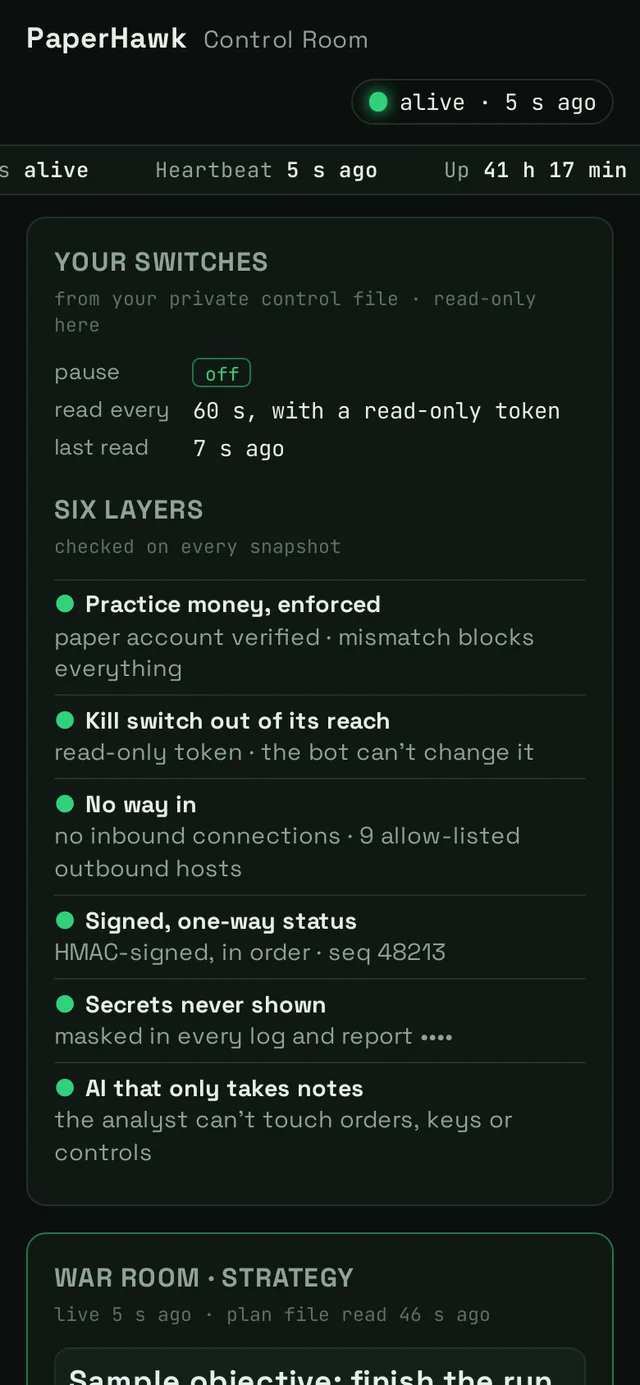
These came before a single decision was written, and every snapshot confirms them.
A service manager brings it back within seconds after a crash, and a watchdog catches a hung process.
Standard-library Python on a free-tier server, with the room on free tiers too.
When the run ends, the server, the room, its database and every token are deleted.
Built in an autonomous mode with its own review rules, one gated stage at a time.
The spec and rules, read back and agreed before any code.
Repositories, local checks and the cloud server created.
Order handling, safety guards, owner controls, logs and reports.
The bot's own decision-making, plus the note-taking AI analyst.
Extra modules, each behind an owner switch.
The owner-only status page with signed snapshots.
A week of untouched practice runs, compared against a simulator.
Installable on Android, with one sign-in a month.
The run plays out with emergency fixes only, then everything is torn down.
PaperHawk trades a practice account only and never real money. Nothing on this page is investment advice. How it decides what to do is kept private. All Control Room values shown are demo data; the pause banner and switch panel were set up for this demo to show what the owner's controls do.
Bots, schedulers and watchers with the guard rails, logs and kill switches to match.